



In today’s design landscape, contemporary kitchen surfacing materials are no longer just about appearance they define durability, hygiene, sustainability, and long-term property value. Homeowners, architects, and builders are increasingly prioritizing surfaces that balance modern aesthetics with real-world performance.
As we move deeper into 2026, the demand for smarter, more resilient kitchen surfaces continues to grow. Brands like Hyundai L&C are helping shape this evolution by offering advanced surface technologies that respond to modern lifestyle needs without compromising on design flexibility or functionality.
This guest post explores the latest innovations, material comparisons, and practical insights to help you choose the right surfacing solution for today’s kitchens.
Why Contemporary Kitchen Surfacing Materials Matter More Than Ever
Modern kitchens are no longer isolated cooking spaces. They are multifunctional environments used for cooking, dining, working, and socializing. This shift has raised expectations for surface performance.
Contemporary kitchen surfacing materials must now deliver:
- High resistance to heat, stains, and scratches
- Easy maintenance for busy households
- Hygienic, non-porous surfaces
- Visual consistency with modern interior trends
- Long-term durability under heavy use
The best materials today are engineered to support both lifestyle and design, not just visual appeal.
The Evolution of Kitchen Surface Design
Kitchen surfacing has evolved significantly over the past two decades. Traditional materials like laminate and natural stone are still used, but they are increasingly being replaced or enhanced by engineered surfaces.
Key shifts in modern surfacing trends include:
- From natural to engineered materials
Engineered surfaces offer more consistency and fewer imperfections. - From high maintenance to low maintenance
Homeowners now prefer surfaces that do not require sealing or special treatments. - From single-use to multi-functional design
Surfaces are now expected to perform in cooking, dining, and workspace roles. - From aesthetic-only to performance-driven choices
Durability is now just as important as appearance.
Popular Contemporary Kitchen Surfacing Materials in 2026
Understanding the most widely used materials helps clarify what works best for different kitchen environments.
1. Quartz Surfaces
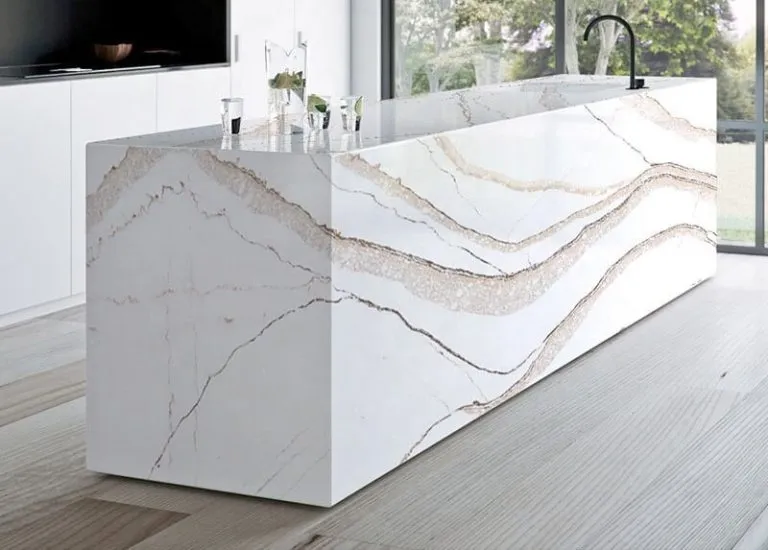
Quartz remains one of the most popular contemporary kitchen surfacing materials due to its balance of beauty and performance.
Key benefits:
- Non-porous and highly hygienic
- Resistant to stains and scratches
- Available in a wide range of colors and patterns
- Consistent appearance across slabs
Quartz is often used in modern residential kitchens where durability and style must coexist.
2. Porcelain Slabs
Porcelain is gaining momentum due to its extreme heat resistance and slim-profile aesthetics.
Advantages include:
- Highly resistant to heat and UV exposure
- Lightweight compared to natural stone
- Suitable for indoor and outdoor kitchens
- Minimal water absorption
This makes porcelain a strong choice for contemporary architectural designs.
3. Solid Surface Materials
Solid surface materials are known for their seamless appearance and repairability.
Benefits:
- Seamless joints for a clean modern look
- Can be thermoformed into curved designs
- Easy to repair minor scratches
- Wide range of matte and glossy finishes
These surfaces are often used in minimalist kitchen designs.
4. Natural Stone (Granite & Marble)
While more traditional, natural stone is still relevant in premium kitchen designs.
Pros:
- Unique natural patterns
- High-end visual appeal
- Strong heat resistance (especially granite)
Cons:
- Requires sealing and maintenance
- Porous surfaces may stain over time
Natural stone is often chosen for luxury-focused kitchens.
5. Hybrid Engineered Surfaces
Modern manufacturers, including companies like Hyundai L&C, are developing hybrid surfaces that combine mineral composites with advanced resins and binding technologies.
Key strengths:
- Enhanced durability and flexibility
- Improved resistance to daily wear
- Greater design versatility
- Reduced maintenance requirements
These materials represent the next step in kitchen surfacing innovation.
How to Choose the Right Contemporary Kitchen Surfacing Material
Selecting the right surface depends on lifestyle, design goals, and usage patterns.
1. Consider Usage Intensity
- High-traffic kitchens → quartz or hybrid surfaces
- Light-use kitchens → marble or solid surface options
2. Evaluate Maintenance Preferences
If you prefer low maintenance:
- Choose non-porous materials like quartz or porcelain
- Avoid materials requiring sealing or polishing
3. Match Design Aesthetic
- Minimalist interiors → solid surfaces or porcelain
- Luxury designs → marble or engineered stone
- Industrial-modern → matte quartz or concrete-look finishes
4. Think Long-Term Durability
Investing in high-performance contemporary kitchen surfacing materials ensures fewer repairs and replacements over time.
Design Trends Shaping Kitchen Surfaces in 2026
Modern kitchen design is evolving rapidly, and surface materials are at the center of this transformation.
Trending directions include:
- Matte finishes over high gloss for a more natural look
- Neutral color palettes like warm whites, greys, and earth tones
- Large-format slabs for seamless visual flow
- Textured surfaces that mimic natural stone or concrete
- Integrated countertops and backsplashes for a unified aesthetic
These trends highlight a shift toward subtle, functional elegance.
Sustainability in Kitchen Surfacing Materials
Sustainability is becoming a key decision factor in material selection. Manufacturers are increasingly focusing on eco-conscious production methods.
Sustainable innovations include:
- Reduced waste manufacturing processes
- Use of recycled materials in composites
- Longer product lifespans reducing replacement cycles
- Energy-efficient production technologies
Companies like Hyundai L&C are part of this broader movement, developing surfaces that balance environmental responsibility with performance-driven design.
Common Mistakes to Avoid When Choosing Kitchen Surfaces
Even with many options available, homeowners often make avoidable mistakes.
1. Prioritizing looks over performance
A visually appealing surface may not always suit your cooking habits.
2. Ignoring maintenance requirements
Some materials require more upkeep than expected.
3. Overlooking edge and installation quality
Poor installation can reduce even the best material’s lifespan.
4. Choosing trends without long-term thinking
Trendy colors or textures may not age well in changing interior styles.
The Future of Contemporary Kitchen Surfacing Materials
The future of kitchen surfacing is moving toward smarter, more adaptive materials.
We can expect:
- Increased use of engineered composites
- Antimicrobial surface technologies
- Ultra-thin yet highly durable slabs
- Customizable digital surface printing
- Greater integration of sustainability standards
As innovation continues, contemporary kitchen surfacing materials will become even more performance-focused while offering greater design freedom.
Final Thoughts
Choosing the right contemporary kitchen surfacing materials is a critical decision that impacts both functionality and aesthetics. Whether you prioritize durability, sustainability, or design flexibility, today’s market offers a wide range of solutions tailored to modern living.
Brands like Hyundai L&C are helping push the boundaries of what kitchen surfaces can achieve combining innovation, durability, and design-forward thinking.
By understanding your needs and the strengths of each material type, you can create a kitchen space that performs beautifully for years to come.